
Project Kicks Off at CEA Grenoble!
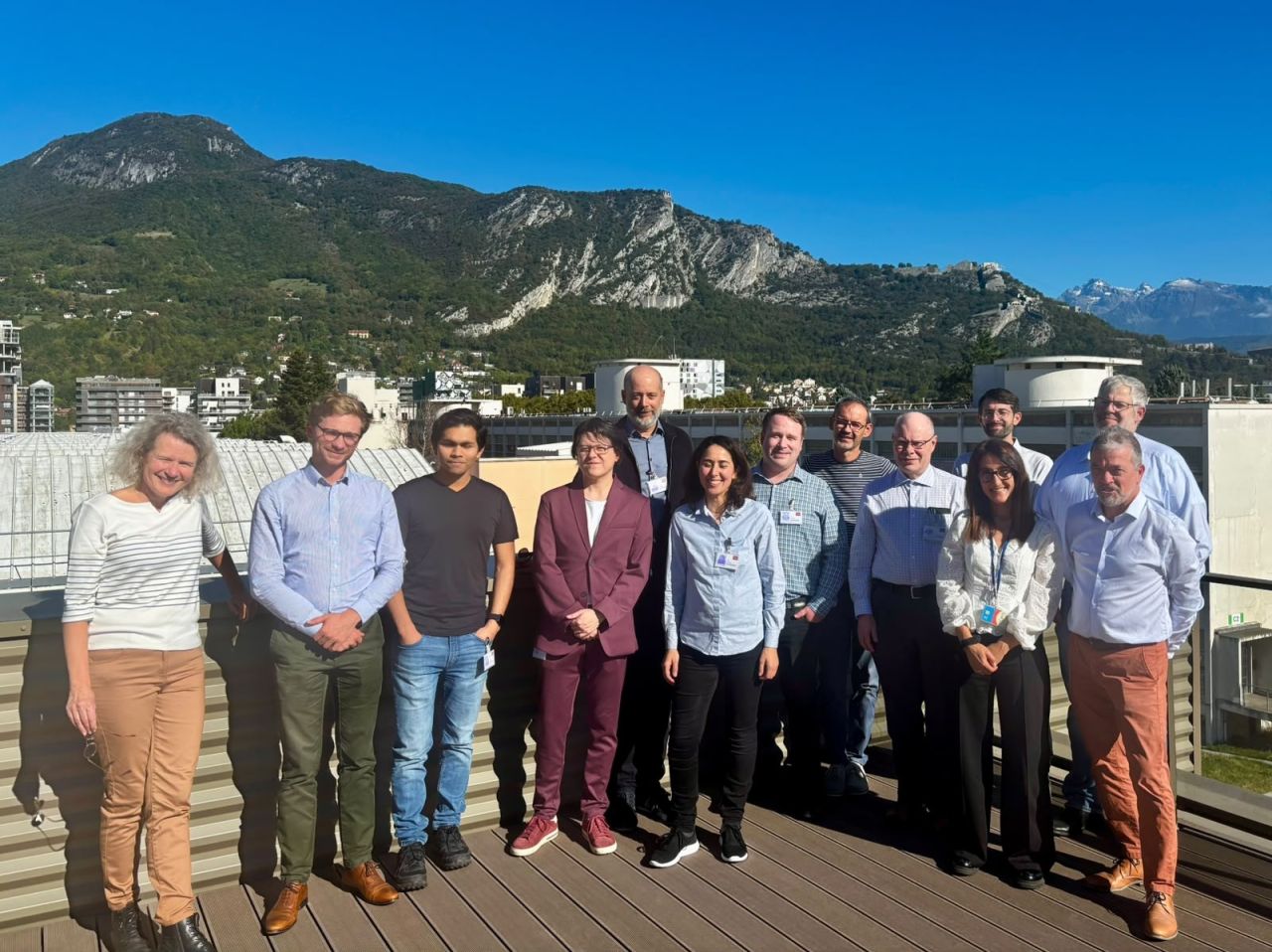
The CONVERT-IL project officially started with a two-day kick-off meeting held on 12–13 October 2026 in Grenoble, France, hosted by the project coordinator, CEA.View more
Abstract
The transition to a sustainable circular economy requires not only decarbonizing energy production but also rethinking carbon sourcing and material inputs for fuels, chemicals, and advanced materials. Conventional recycling faces limitations, while emerging industrial approaches offer new ways to transform waste into valuable resources. CO2 conversion into chemicals, fuels, polymers, and minerals remains limited. A 2023 report estimates a production capacity of 1.3Mt CO2/year, compared to 50-60Mt CO2 captured globally.
Ethylene (C2H4) is a high-value target, mainly for PET packaging, agricultural, pharmaceutical, and construction applications. Current industrial ethylene production relies on petroleum or natural gas via steam cracking, following a linear carbon economy. Zero-carbon CO2-based routes are under development, typically involving four steps: capture, desorption, electro-conversion to CO, and conversion to C2+ molecules. These are limited by energy intensity, catalyst efficiency, feedstock variability, scalability and economic factors.
CONVERT-IL aims to simplify this route by eliminating two steps and using ionic liquids as a single chemical vector for both capture and electro-conversion, creating an all-in-one device. Ionic liquids provide electrochemical stability, ionic conductivity, tunable CO2 solubility, and low vapor pressure, enabling efficient capture and recycling. Iolitec will design the IL composition, fine-tuned with SINTEF’s machine learning, while CEA will develop a compatible catalyst for selective CO2-to-C2H₄ conversion. eChemicles will develop and scale an IL-compatible electrolyser, and EKIUM will perform techno-economic and life-cycle analyses. The project will demonstrate feasibility with industrial CO2 and assess scalability, economic viability, and environmental performance.
Objectives
- Develop an all-in-one device: Capture CO₂ directly from industrial flue gases and transform it into ethylene, turning waste emissions into a valuable chemical feedstock.
-
Integrate capture and conversion: Harness ionic liquids and a novel catalyst to combine selective CO₂ capture and electrochemical conversion in a single, streamlined process.
-
Design and optimise ionic liquids: Develop compositions suited to both CO₂ capture and electrochemical conversion, combining Iolitec’s formulation expertise with SINTEF’s machine-learning capabilities.
-
Develop a selective catalyst: Create an ionic-liquid-compatible catalyst for CO₂-to-ethylene conversion, led by CEA.
-
Develop and scale the electrolyser: Engineer an ionic-liquid-compatible electrolyser that supports the integrated process and its scale-up, led by eChemicles.
-
Demonstrate feasibility with industrial CO₂: Validate the integrated system using industrial CO₂ feedstocks and assess its potential for deployment at larger scales.
-
Assess economic and environmental performance: Conduct techno-economic and life-cycle analyses, led by EKIUM, to evaluate the process’s economic viability and environmental impacts.

This project has received funding from the European Union’s Horizon Europe research and innovation programme under grant agreement No 101306999 . This publication [communication] reflects the views only of the author, and the Commission cannot be held responsible for any use which may be made of the information contained therein.
COMMISSARIAT A L ENERGIE ATOMIQUE ET AUX ENERGIES ALTERNATIVES
[ CEA ]
France
Isabelle ROUGEAUX

Isabelle ROUGEAUX


SINTEF AS
[ SINTEF ]
Norway
Amira Rachah
Amira Rachah
ECHEMICLES ZARTKORUEN MUKODO RESZVENYTARSASAG
[ ECHEMICLES ]
Hungary
Istvan Burus
Istvan Burus
IOLITEC IONIC LIQUIDS TECHNOLOGIES GMBH
[ IOLITEC GmbH ]
Germany
Boyan Iliev
Boyan Iliev

ABGI FRANCE
[ ABGI FRANCE ]
France
Céline BLANCHON
Céline BLANCHON

EKIUM
[ EKIUM ]
France
Niels Haentjens
Niels Haentjens
graph - chart
news
events
Kick Off Meeting